The Breaking Point: How Climate Change is Rewriting the Rules of Urban Infrastructure
For centuries, cities were built on a simple premise: the future would look largely like the past. Engineers designed stormwater systems based on “100-year floods,” transit systems to withstand historic temperature ranges, and seawalls to resist known tidal lines.
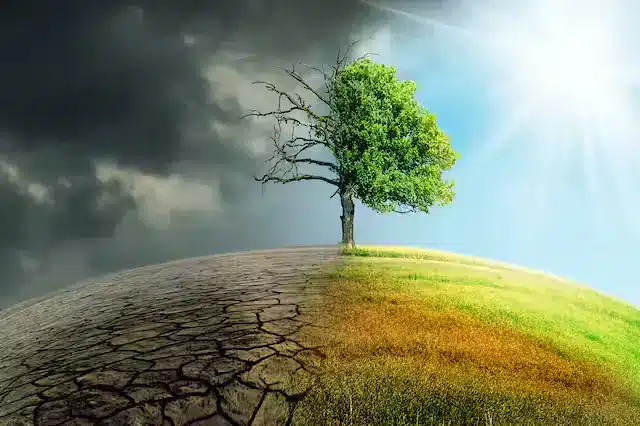
Today, climate change is shattering those historical baselines. As global temperatures rise, urban infrastructure is facing an unprecedented multi-front assault from extreme weather, rising seas, and shifting climate patterns. Modern cities are finding that the very systems keeping them alive—power grids, transit networks, water supplies, and roads—are increasingly vulnerable to the changing planet.
1. The Heat is On: Thermal Stress and Power Grids
Rising global temperatures and prolonged heatwaves do more than make city slickers uncomfortable; they fundamentally threaten physical infrastructure.
- Grid Overload: As heatwaves stretch on, demand for air conditioning skyrockets, pushing electrical grids to their absolute breaking points. This often triggers rolling blackouts or transformers exploding from thermal stress.
- Deforming Materials: Extreme heat physically warps the urban landscape. Asphalt roads can soften and rut under heavy traffic, while steel rail lines can suffer “sun kinks”—expanding and buckling, which leads to severe train delays or derailments.
Case in Point: The Urban Heat Island Effect
Cities are inherently hotter than surrounding rural areas due to the Urban Heat Island (UHI) effect. Vast expanses of concrete, dark roofs, and asphalt absorb and radiate heat, compounding global warming trends and turning metropolitan areas into localized ovens.
2. Deluges and Outdated Drainage
Climate change is supercharging the hydrological cycle, leading to heavier, more intense downpours. Unfortunately, most urban drainage systems were designed for a different era.
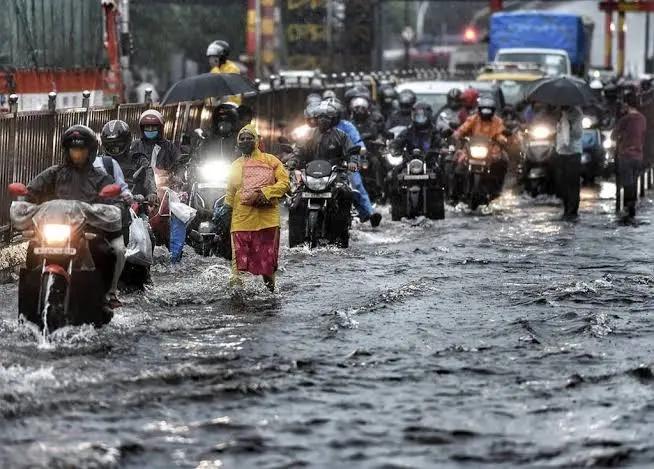
- Urban Pluvial Flooding: When a month’s worth of rain falls in a matter of hours, older stormwater networks are quickly overwhelmed. Water backs up into streets, paralyzing traffic, flooding subways, and damaging basement properties.
- Combined Sewer Overflows (CSOs): In many older cities, stormwater and domestic sewage share the same pipes. During intense storms, these systems bypass treatment plants and dump raw, untreated sewage directly into local rivers and bays, creating massive public health hazards.
3. Rising Seas and Coastal Squeeze
A significant portion of the world’s population lives in coastal megacities. For these areas, sea-level rise and heightened storm surges present an existential threat.
- Sunny Day Flooding: High tides are increasingly breaching coastal barriers even without a storm in sight. This chronic tidal flooding regularly corrodes underground utilities, disrupts businesses, and degrades road foundations over time.
- Saltwater Intrusion: As sea levels rise, saltwater pushes further inland into coastal aquifers. This threatens freshwater drinking supplies and rapidly accelerates the corrosion of underground concrete and steel foundations, silently weakening buildings from the bottom up.
4. The Path Forward: Building Resilient Cities
Continuing with business-as-usual is no longer a viable option. Adapting urban infrastructure to climate change requires a paradigm shift from fail-safe design to safe-to-fail design—acknowledging that disruptions will happen and building systems that can absorb the shock.
| Strategy | Actionable Example | Impact |
| Grey-to-Green Infrastructure | Permeable pavements, green roofs, and urban wetlands. | Absorbs rainwater like a sponge, reducing the load on traditional sewer systems while cooling the city. |
| Grid Decentralization | Implementing localized microgrids and rooftop solar. | Ensures critical facilities (like hospitals) stay powered even if the main grid collapses. |
| Cooling the Concrete | Using reflective “cool pavements” and expanding the urban tree canopy. | Mitigates the Urban Heat Island effect and protects physical assets from thermal degradation. |
The Bottom Line
Urban infrastructure is the invisible scaffolding of modern civilization. If it fails, our economies and societies stall. The challenge of the 21st century is not just reducing emissions to prevent future warming, but actively retrofitting and reimagining our cities to survive the climate changes that are already locked in. The cities that thrive will be those that view sustainability and climate resilience not as a luxury line-item, but as the fundamental foundation of their future.